One of Europe's best beaches.
Famara faces the North Atlantic swells head-on. When they break, the waves can reach four metres. In summer at low tide, a perfect school for beginners. A dozen certified surf schools in the village.
Six kilometres of golden sand under a 600-metre cliff. Across the water, the sharp outline of La Graciosa, the eighth island. Surfers at dawn, kitesurfers at noon, children with buckets until sunset. The great beach of an entire island.
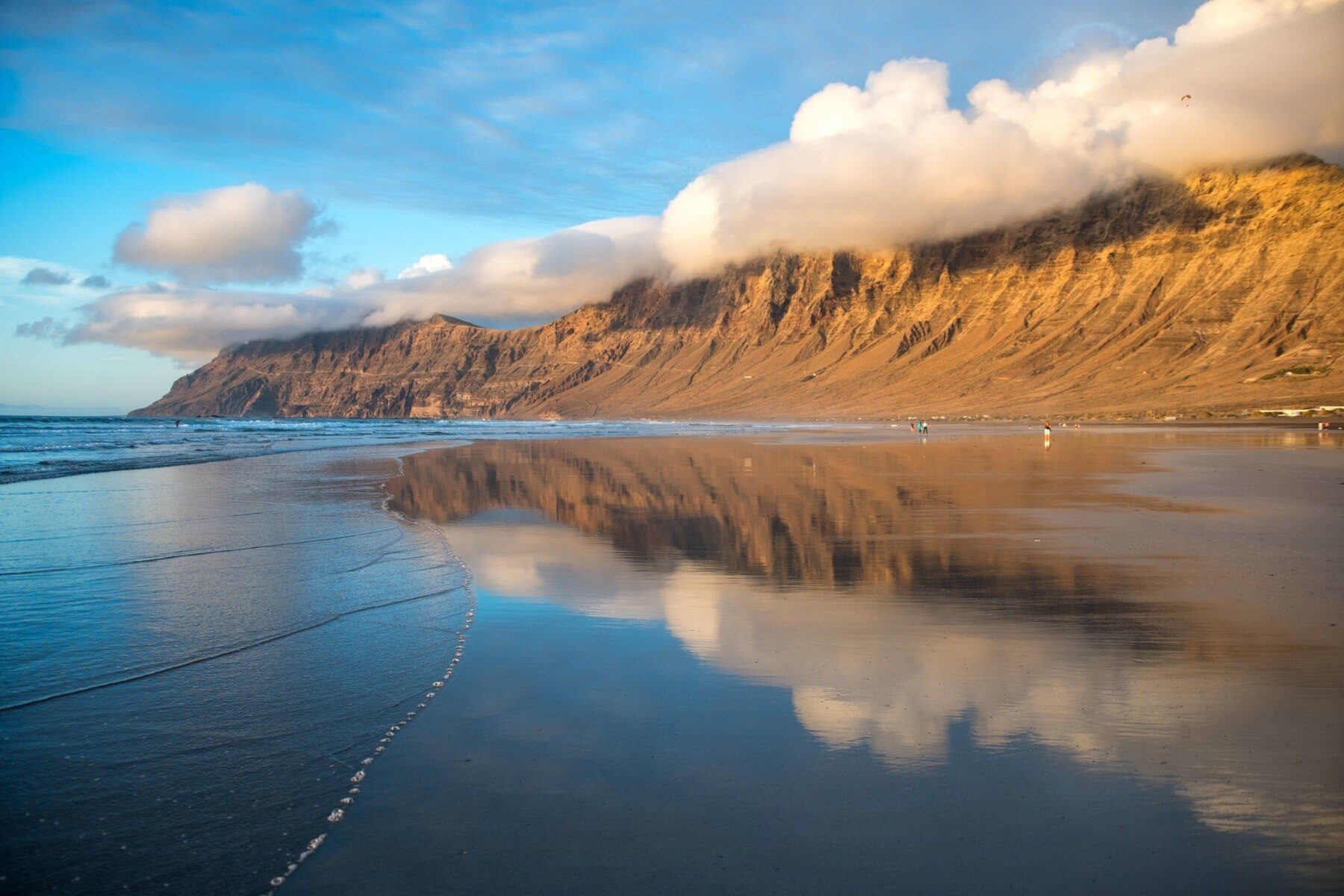 Sunset, low-tide mirror
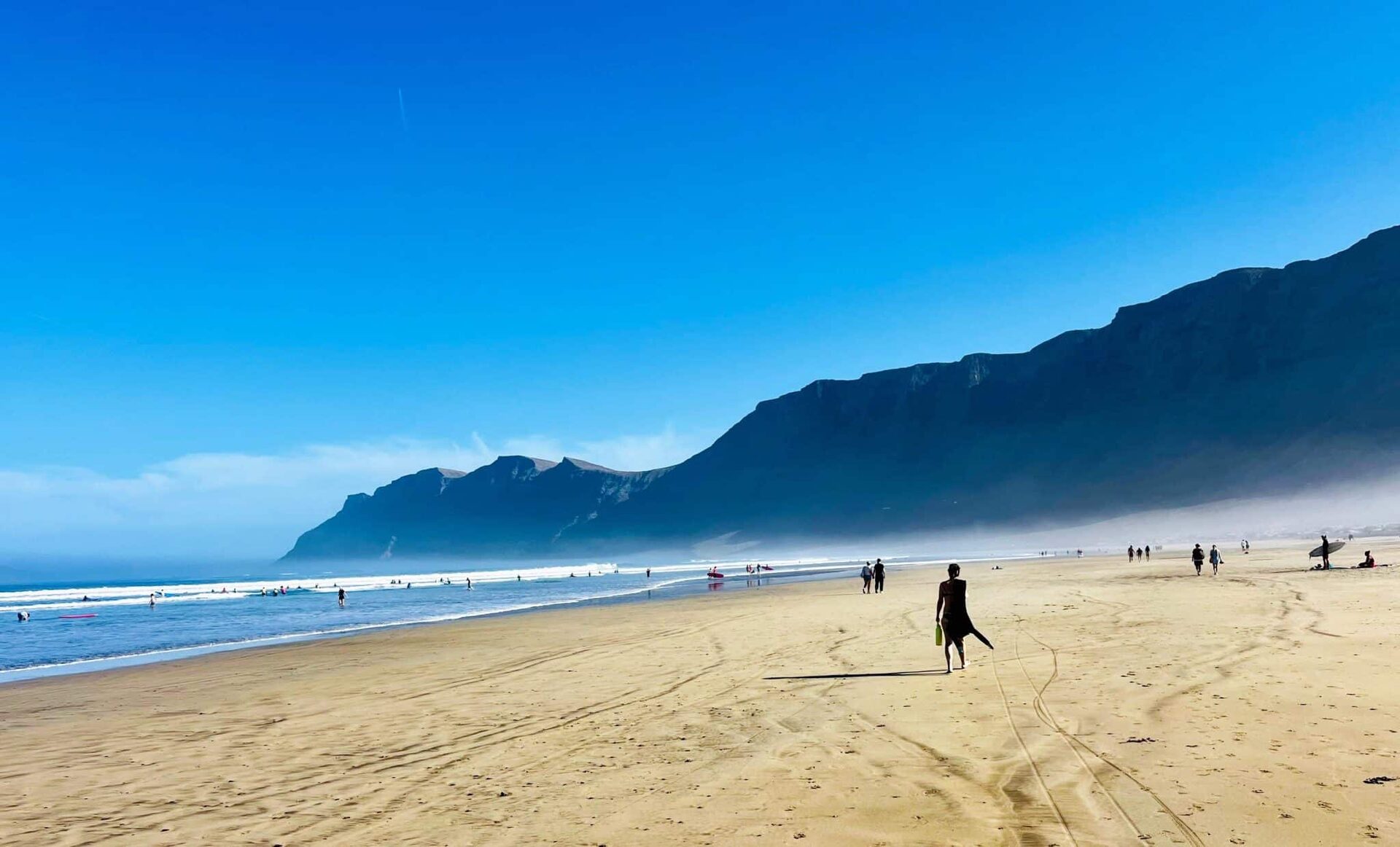 Walkers beneath the cliff
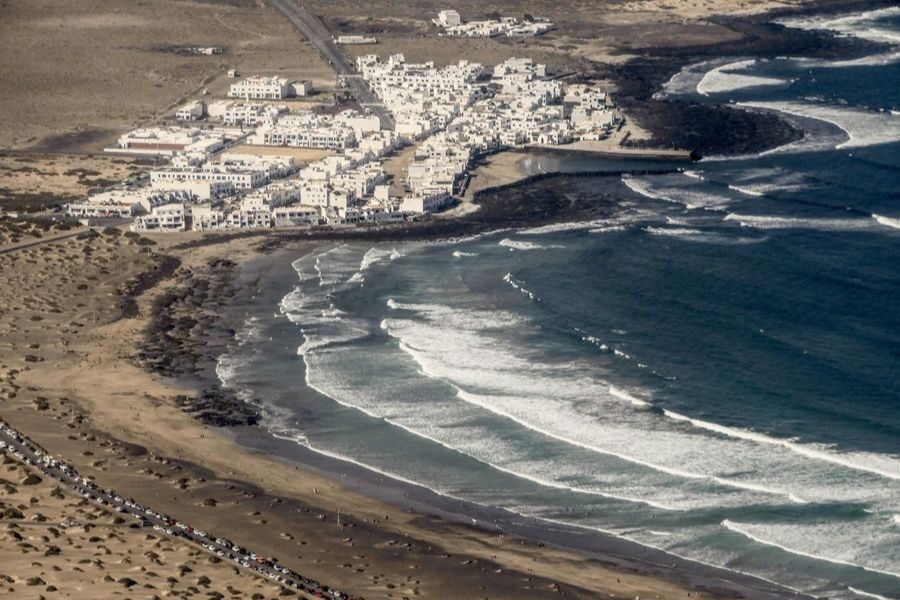 Caleta de Famara from above
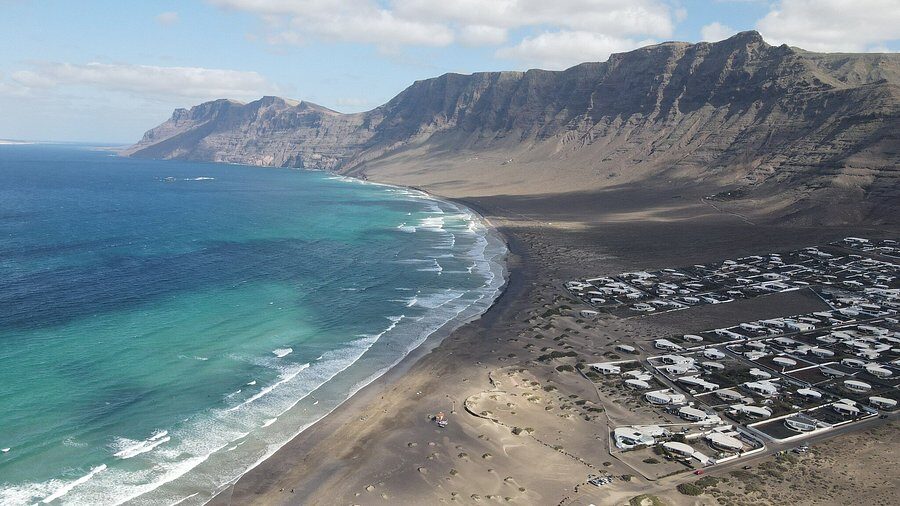 Black sand, turquoise water
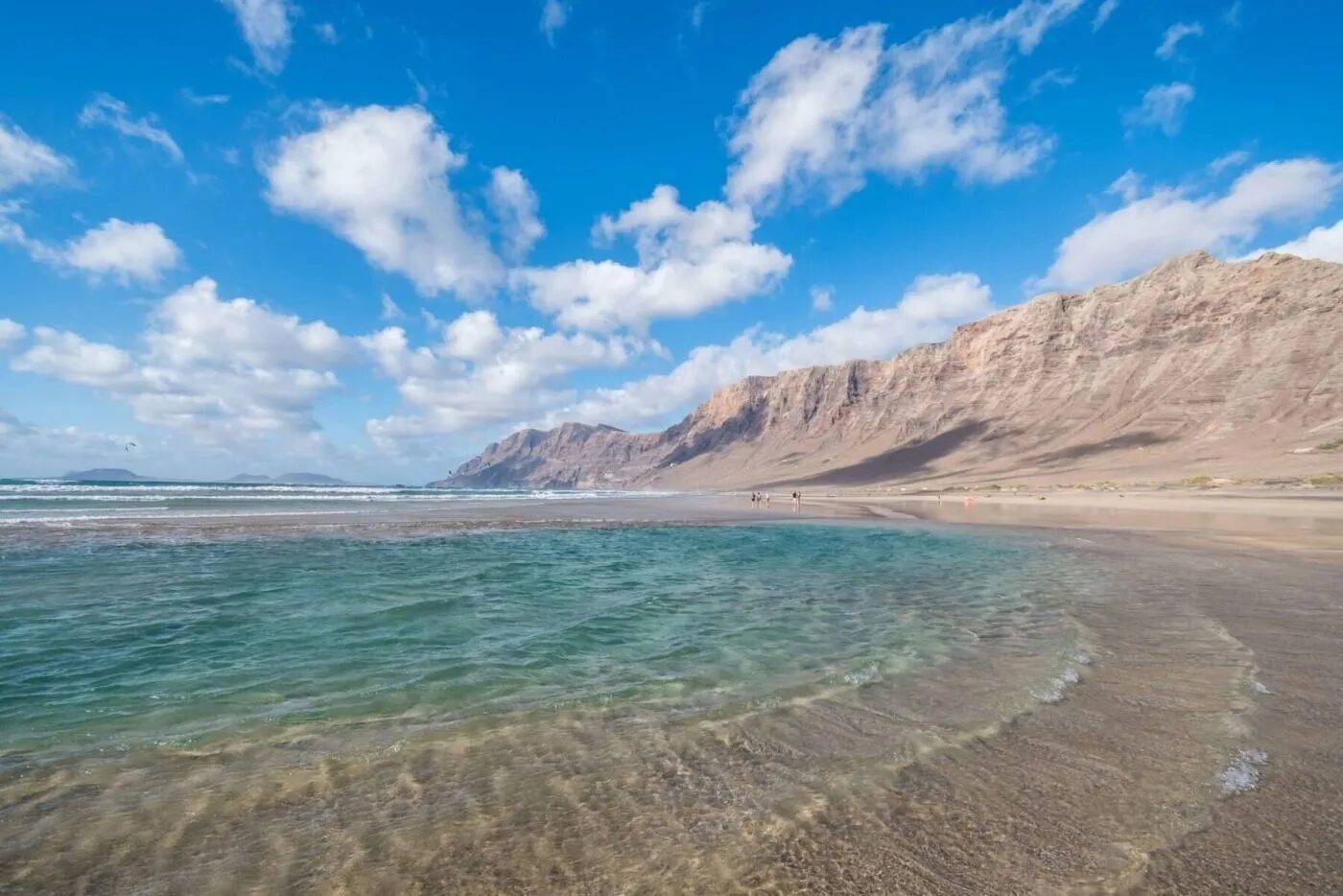 Pools beneath the cliff
Famara faces the North Atlantic swells head-on. When they break, the waves can reach four metres. In summer at low tide, a perfect school for beginners. A dozen certified surf schools in the village.
Opposite Famara, the eighth Canary island — La Graciosa — a UNESCO Biosphere Reserve. No paved roads, no traffic. The ferry leaves from Órzola, forty minutes by car. Perfect day: surf in the morning, La Graciosa in the afternoon.
A traditional fishing village, today the sanctuary of European surf. Restaurants with the day's catch, board shops, low houses facing the ocean. César Manrique grew up watching this horizon; he painted it a hundred times.
When the tide drops, the wet sand turns into a mirror. The sun falls behind the cliff and for ten minutes the landscape inverts: clouds at your feet, sky doubled. Famara's sunsets are renowned across Europe.
Steady northerly breeze, clean sunsets. The cliff's microclimate makes the beach a year-round surf destination.
Twenty minutes by car from Tinaguache. Leave with a board, return with calm.
Want to sleep in Famara itself? We manage another house there: Famara Risco House →