The nameFrom Tinaguache to Montaña Grande.
Tinaguache is a pre-Hispanic Guanche toponym. The Diccionario de Toponimia de Canarias (Trapero & Santana, ULPGC — Royal Spanish Academy Prize 2019) proposes the morphology ti-n-ache ('the one of ache'), related to the toponym Tinache. Three names coexist in local speech today: Tinaguache, Montaña Grande (in opposition to nearby Montaña Téjida, smaller) and Montaña del Hurón (after the ravine that crosses it). Nineteenth-century documents —Madoz, Chil, Millares— already record the word.
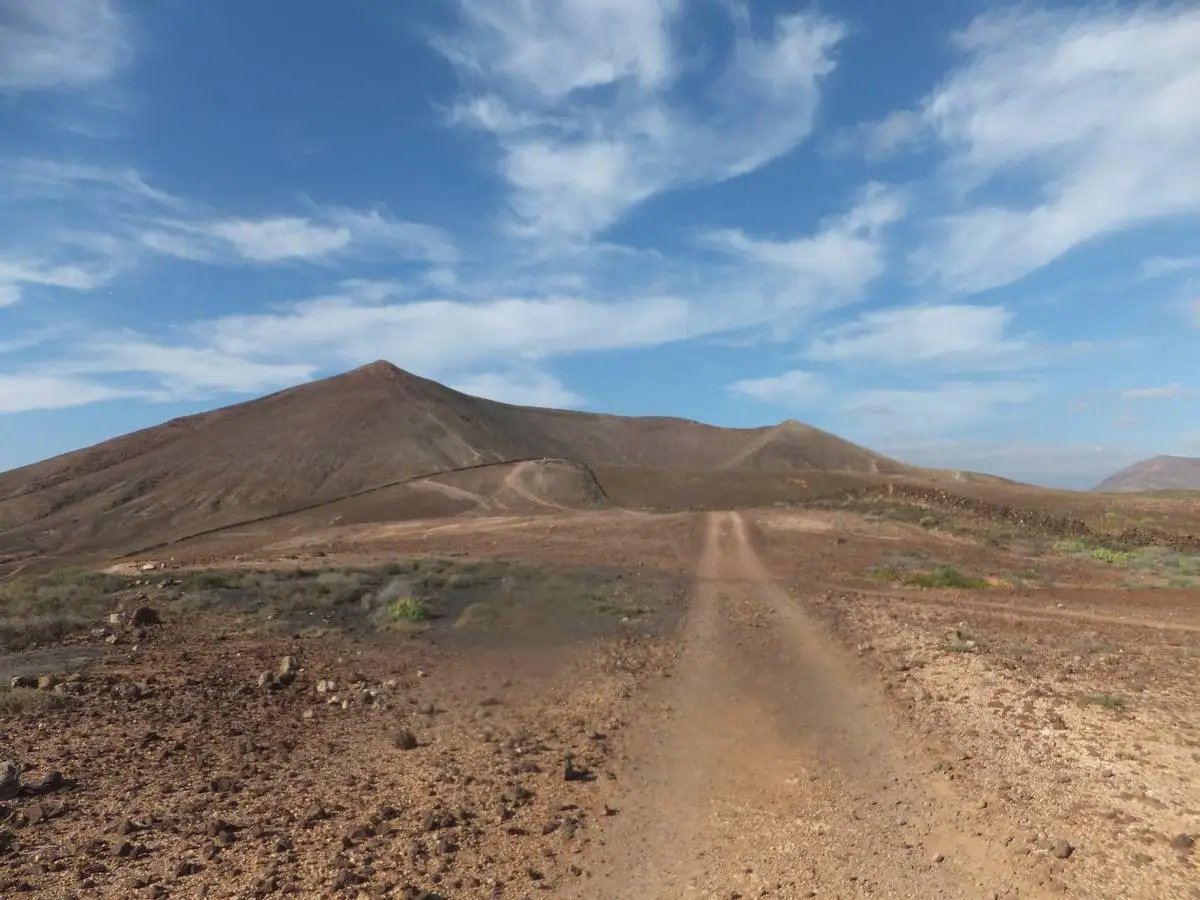
The shapeA solitary cone.
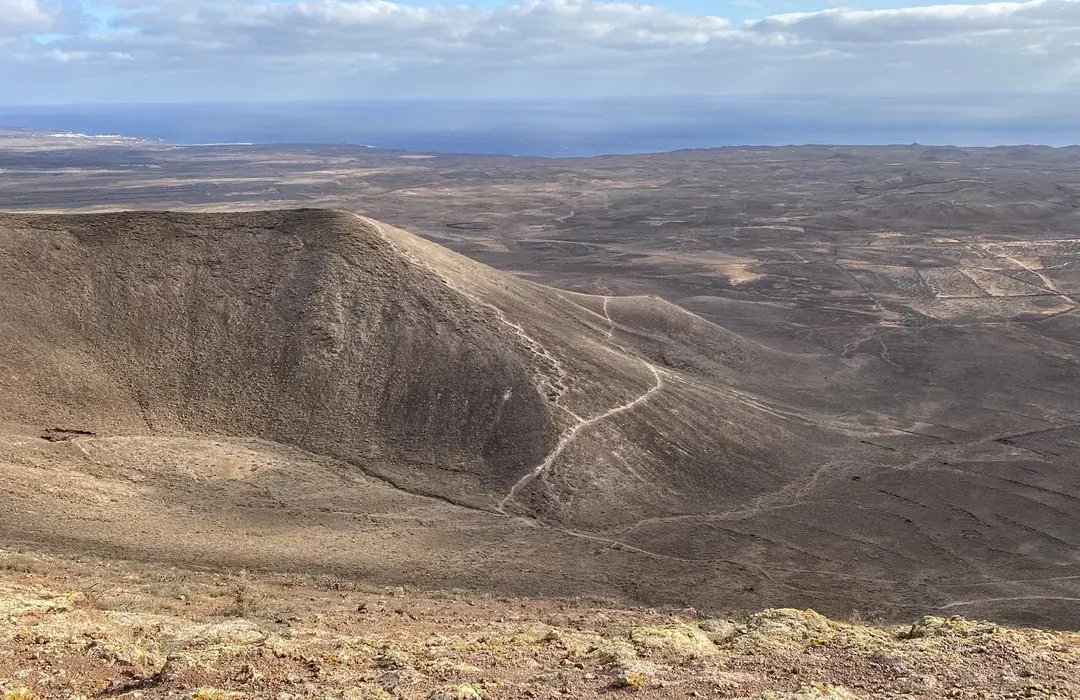
In Lanzarote's place names, "montaña" means an individual volcanic cone, not necessarily a large elevation. Tinaguache rises alone, with Montaña Téjida pressed against it to the north and a flat space between them with its own name: Entremontañas. The Barranco del Hurón crosses it. Around it, gavias —traditional cultivation fields on volcanic soil— that also took its name.
On footThree hours to the summit.
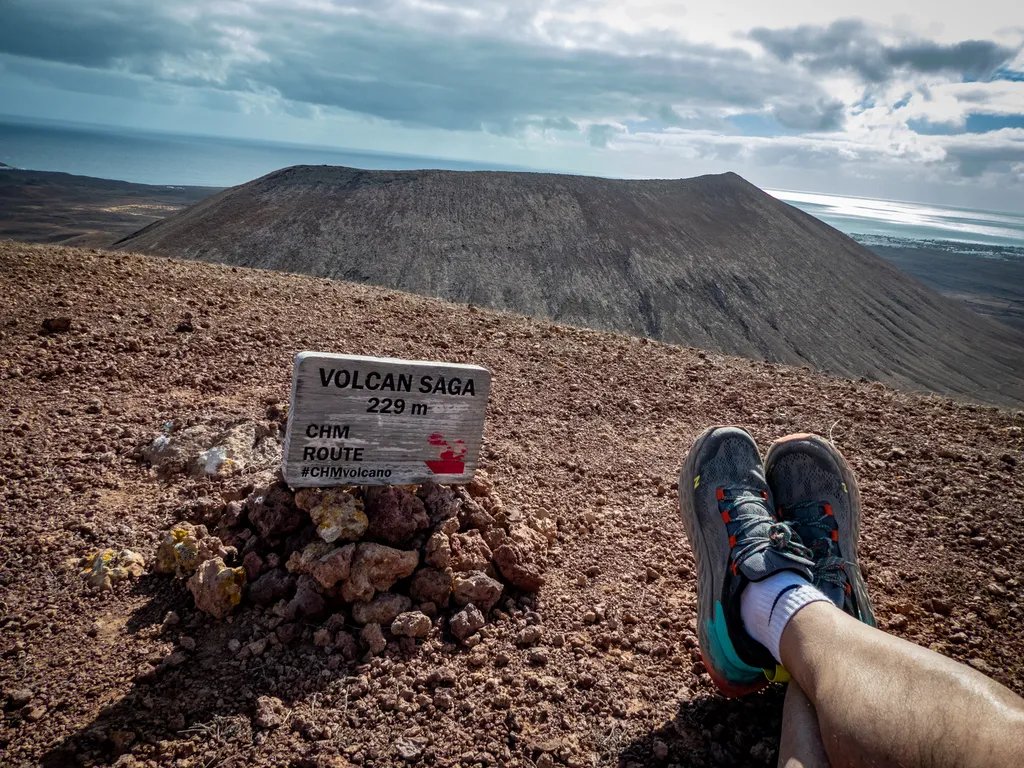
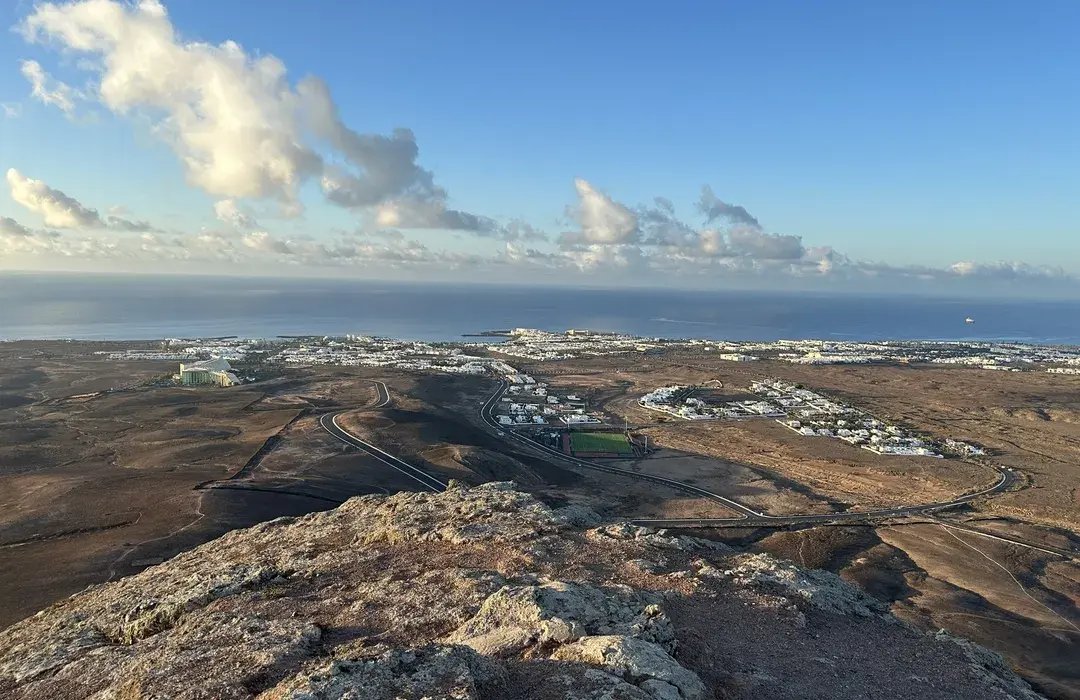
Full loop (Wikiloc): 13.45 km · 300 m elevation gain · moderate difficulty · 3h 9 min moving time. Starts from Costa Teguise, circles the cone at its base, ascends steeply and descends along a narrow ridge. Short version: from Calle Atalaya, one kilometre from Hotel Beatriz, an easy semicircular route with summit ascent. Strong wind at the top — the summit's reward is the view.
IdentityWhy it gives the house its name.
When we chose what to call the house, we looked at the horizon and borrowed its name. Tinaguache is the first thing that lights up at dawn from the pool and the last to remain illuminated at sunset. It isn't ours — it belongs to the island, to the Guanche word that survived five centuries. We give it back every time we say it.